
Receive Tresor Capital’s free weekly newsletter, which includes:
- Analyses of family holding companies and serial acquirers
- Deep dives into fundamental investing
- Michel Salden’s keen macro vision
Those who rely on standard financial screeners or a quick glance at traditional key figures run the risk of making a crucial mistake: assessing all companies using the same yardstick. This “one-size-fits-all” approach is particularly misleading when analysing serial acquirers and family holdings. These are not traditional companies, but essentially investment machines. Their success depends on the art of capital allocation, a discipline that requires a different, deeper analysis than the usual ratios suggest.
Tresor Capital partner Michael Gielkens recently shared insights that underscore the principles we apply when selecting these exceptional value creators. It is about finding the right partners for the long term, not speculating on short-term market movements.
The selection process: what we look for
Identifying a superior investment holding company requires a rigorous and disciplined process. A large part of the investment universe is already ruled out for us on the basis of a few fundamental criteria:
- Skin in the Game: It is essential to us that the management, the founder or the (founding) family has a significant personal interest in the company. This ensures that the interests of the insiders are aligned with those of us, the co-shareholders.
- Return on Invested Capital (ROIC): A consistently high return demonstrates that management is capable of profitably (re)investing capital, which is the engine of compounding.
- A Strong Balance Sheet: We avoid companies with high debt levels. A conservative balance sheet offers flexibility and enables a company to seize opportunities, particularly in difficult times.
Equally important are the factors that we consider to be warning signs. A lack of skin in the game among management, a strategy focused on acquiring low-quality companies with excessive debt, a high degree of cyclicality in business activities, or frequent changes in management that are filled with external directors rather than internal talent are reasons for us to look elsewhere.

A different perspective on goodwill and discounts at family holding companies
Traditional accounting standards can give a distorted picture at investment holding companies. Two concepts deserve special attention.
For a serial acquirer, a significant goodwill item on the balance sheet is not a red flag, but a logical consequence of their business model. The question is not whether there is goodwill, but what management does with it. Does the acquisition generate a sustainable and high return on the total investment? That is the only question that matters.
The discount at which a family holding company is trading relative to its net asset value is not a simple buying indicator. It is better to view it as the market’s assessment of the quality of the portfolio and the management’s capital allocation skills. A high discount may be entirely justified if the management has destroyed value in the past. Conversely, a company trading at a low discount may still be an attractive investment if management has proven to be an exceptional value creator.
The most important criterion: the power of incentives
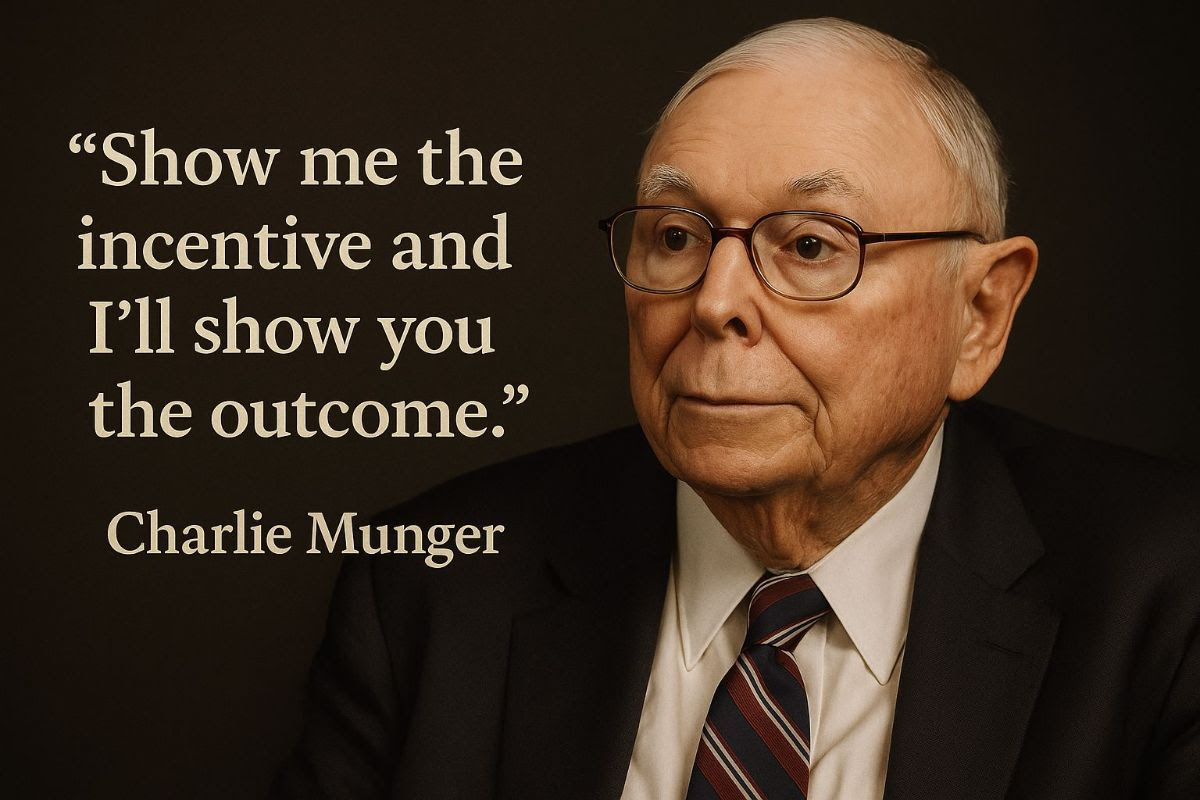
Ultimately, everything can be traced back to one fundamental principle, perfectly articulated by Charlie Munger: ‘Show me the incentive and I’ll show you the outcome.’ The way in which a management team is rewarded determines their behaviour and, with it, the fate of the company.
We carefully analyse remuneration structures. Is management rewarded for long-term sustainable value creation, such as growth in free cash flow per share, or for short-term statistics such as absolute revenue growth? The answer to that question is often the most reliable predictor of future success. Combined with ‘skin in the game’, this forms the basis for a partnership in which we, as shareholders, can thrive.
All these topics are discussed in detail in the English-language podcast by The Dutch Investors, which you can listen to by clicking on the button below.